Reza Azadi
personal website
Research
Neurophysiology of Visual Perception
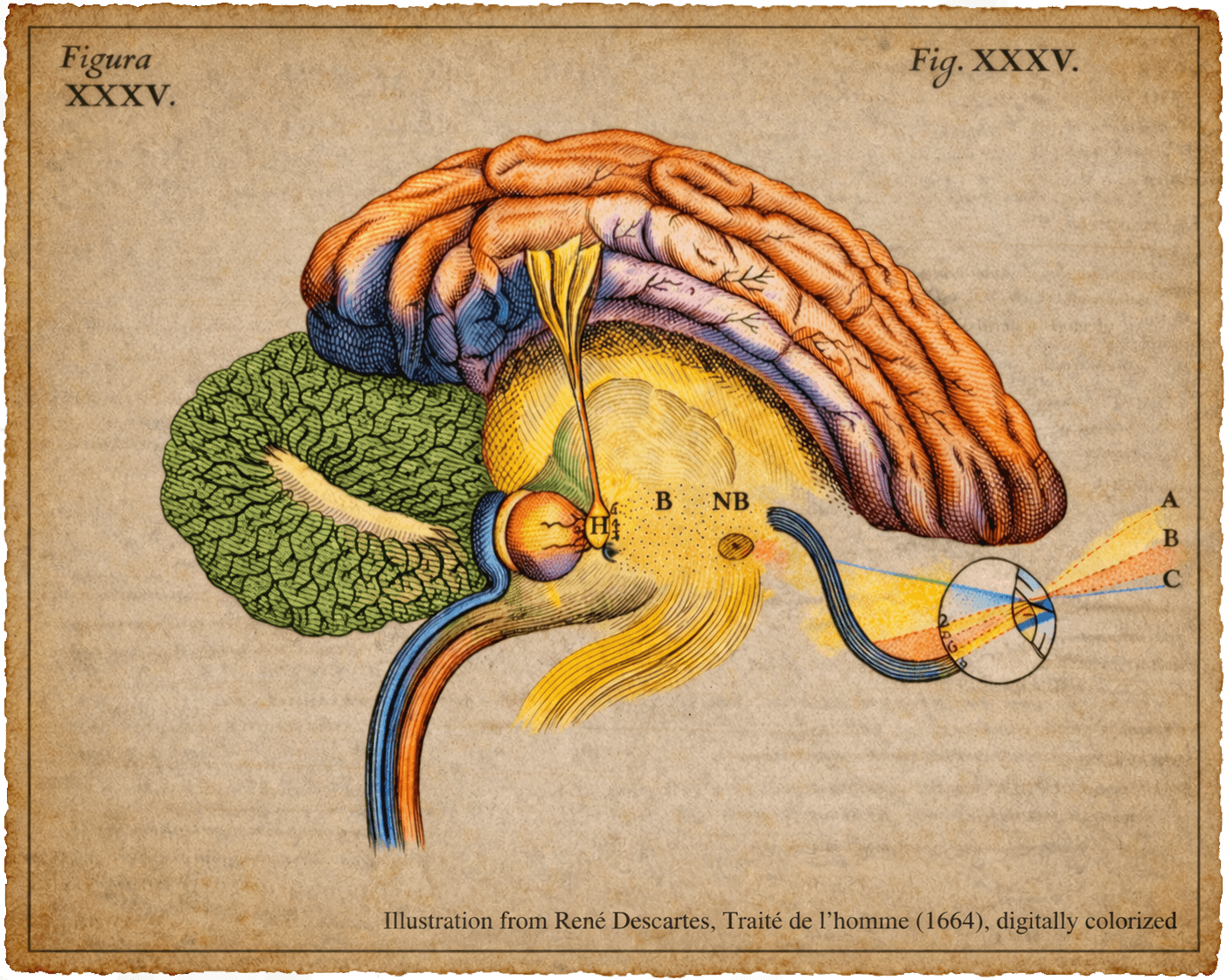
Linking neural activity in the primate visual system to perception and behavior.
Neurosurgical Methods
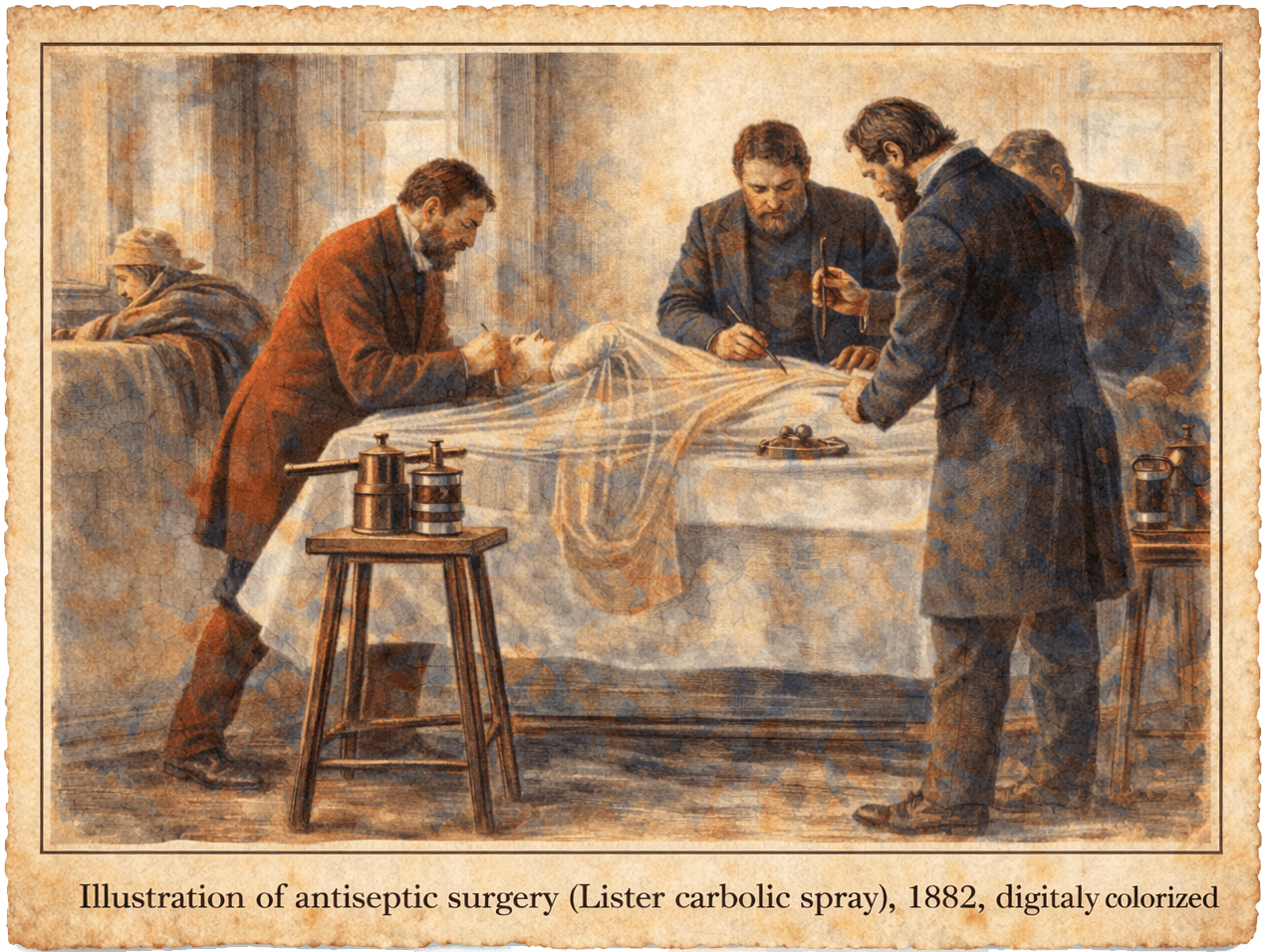
Designing, refining, and applying advanced neurosurgical methods in nonhuman primates.
Neurophysiology of Visual Perception
Overview
My research focuses on understanding how patterns of neural activity in the primate visual system give rise to perception and behavior. I am particularly interested in how populations of neurons relate to what we actually see and how we act in natural viewing conditions. To address these questions, I combine electrophysiology, optogenetics, microstimulation, targeted microinjections, and behavioral approaches to probe the causal relationship between neural activity and perception.
A key component of this work is the use of optogenetic tools to manipulate neural activity with high precision. Advances in chronically implantable systems now make it possible to apply these approaches in primates during behavior, enabling controlled perturbations to test how neural activity contributes to perception.
Rajalingham, R., et al. (2021). Nature methods
Causal Manipulation of Visual Circuits
A central part of this work involves directly perturbing neural circuits and measuring the resulting changes in behavior. By combining optogenetic stimulation with sensitive behavioral tasks, I aim to move beyond correlation and establish causal links between neural activity and perception.
In this line of work, we found that artificially activating neurons in inferotemporal cortex does not produce fixed perceptual effects. Instead, the outcome depends strongly on the visual context, such as the content, visiblity and size of the image being viewed. These findings suggest that perception is not driven by isolated neural activity alone, but emerges from interactions between ongoing sensory input and internally generated neural signals.
Azadi, R., et al. (2023). Current Biology
Lafer-Sousa, R., et al. (2023). Current Research in Neurobiology
Natural Behavior as a Readout of Perception
One powerful and natural behavioral readout of visual perception is eye movement during free viewing. Rather than relying on explicit reports or constrained tasks, free viewing behavior reflects how the visual system prioritizes and samples information in real time. Where we look, and in what sequence, provides a rich and continuous measure of underlying perceptual processes.
Monkeys, like humans, tend to fixate on faces, particularly the eyes, nose, and mouth, as originally described by Alfred Yarbus. In this line of work, we examined the causal contribution of high-level visual neurons to eye movement behavior by reversibly inactivating face-selective regions within inferotemporal cortex. When activity in these regions is suppressed, these viewing patterns become systematically altered. Animals continue to detect faces and orient toward them, but show reduced fixation on facial features contralateral to the inactivated hemisphere.
Azadi, R., et al. (2024). Proceedings of the National Academy of Sciences
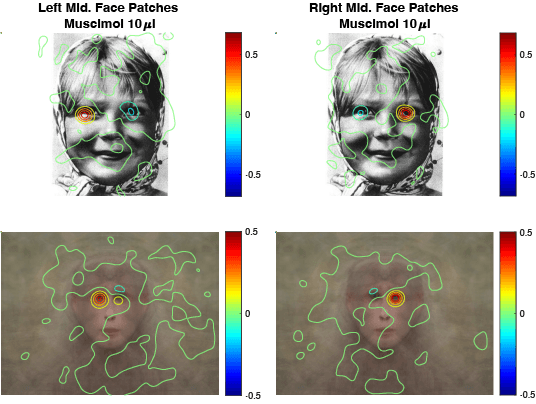
Gaze patterns during free viewing following inactivation of face-selective regions in inferotemporal cortex
(adapted from Azadi et al., PNAS 2024)
Neurosurgical Methods
Overview
A substantial part of my work focuses on developing and performing neurosurgical methods in nonhuman primates. These approaches are designed to support stable, long-term neural recordings and large-scale manipulations.
Chronic Implants and Optogenetics
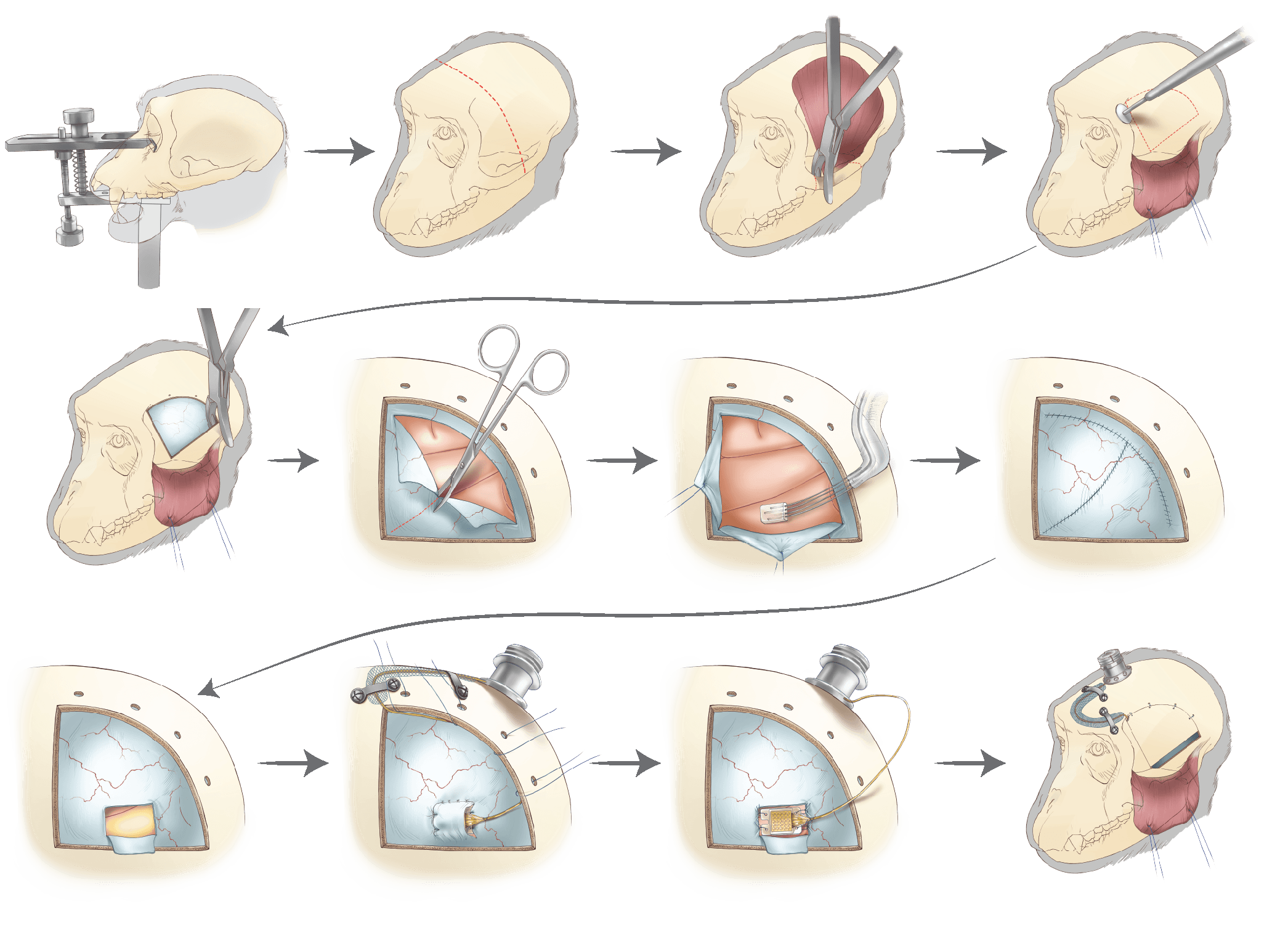
As part of this work, I developed a chronic implantation approach for an Opto-Array, enabling high-throughput behavioral optogenetics in primates.
Azadi, R., et al. Current Protocols (2023)
Targeting Subcortical Structures
I have also developed a detailed protocol for precise and reliable targeting of subcortical structures, combining stereotaxic methods with custom-built injection systems.
Tangen, A. C., et al. STAR Protocols (2026)
Improving Precision and Implant Design
I developed fiducial-based methods for more precise and reliable targeting of deep brain structures.
Harmon, P., et al. bioRxiv (2026)